Publié
January 30, 2026
One godfather, a few serial entrepreneurs, and many unicorns: how Ghent became the Silicon Valley of Flanders
Four billion-dollar companies, 108 AI start-ups, and a market full of young companies worth no less than $50 billion. When it comes to the tech sector, no one in our country can ignore Ghent. What makes the soil there so fertile for technology leaders?
“It used to be a struggle to raise a few million euros for your start-up, but now you can do that here in a matter of hours.” Since last week, Ghent has been home to one more ‘unicorn’. We're not talking about a magical horse, but a tech start-up that has reached a value of 1 billion dollars, usually within ten years of its foundation. The Ghent-based cybersecurity specialist Aikido didn't even need that long: in just three years, its value rose to nine zeros. After Team.Blue, Lighthouse, and Deliverect, Aikido is already the fourth unicorn that the city of Artevelde has produced in recent years. The local tech scene now even hosts four of the seven Belgian billion-dollar start-ups.
But the city's success goes beyond just those billion-dollar companies. Nowhere else in Flanders, for example, are more start-ups being founded in the field of artificial intelligence. According to the Planning Bureau and Ghent University, there are already 108. Data provider Dealroom calculated that the value of local start-ups and scale-ups has climbed from €1 billion to €50 billion over the past ten years. This makes Ghent one of the fastest-growing ecosystems in Europe. How did this happen?
The godfather
We could start this story with Netlog, the social networking site founded in the late 1990s by tech bros Lorenz Bogaert and Toon Coppens, which at its peak had 100 million users and employed around 80 people, before losing the battle against the original, American Facebook.
“But actually, you have to go back another generation,” Louis Jonckheere (41), a key figure in the current tech scene, corrects us on the phone. He is still CEO of Wintercircus in Ghent, the city's tech temple. Today, the iconic building on Lammerstraat in the south of Ghent not only hosts concerts and events, but also houses some forty tech start-ups. But as the forerunner of all this recent activity, Jonckheere points to Alain De Taeye, the legendary founder of Tele-Atlas. “Alain is our godfather.”
De Taeye was a pioneer in digital maps. As early as the 1980s, while working as an assistant at Ghent University, he created the first digital map on a PC. In 1990, he became head of Tele-Atlas, which was acquired by TomTom (the GPS device manufacturer) in 2008 for just under 3 billion euros.
“Tele-Atlas was the first major tech company in Ghent. During my studies, De Taeye was an inspiring example, someone who really looked ahead. He is still on the TomTom management team, because those hardware devices have disappeared, but Tele-Atlas' software is alive and well. They now supply those digital maps to Microsoft and Uber for use on smartphones.”
The Netlog mafia
After graduating with a law degree, Jonckheere joined Netlog. The Flemish Facebook went under, but many start-ups rose from the ashes, such as dating platform Twoo and real estate site Realo. “Netlog brought together a tremendous amount of ambition and talent. The seeds of the Ghent ecosystem were sown in the fallout from that collapse.”
After his time at Netlog, Jonckheere and a few co-founders set up several companies: In The Pocket, known to the general public for its Itsme and Payconiq apps, and then, in 2011, Showpad, a software platform for sales and marketing activities. During the same period, important players such as Silverfin, Teamleader, and Rydoo joined the scene. The second generation of tech companies was born.
It is striking how often the names of the Netlog brothers and the Showpad founders come up when we talk to the third generation of tech players. “I really looked up to those guys when I started my first company in my attic room,” says Gilles Mattelin (35), co-CEO of legal tech company Henchman and co-founder of Tout Bien, the beer brand of YouTuber Average Rob. “Lorenz Bogaert from Netlog was like a father figure to me.”
That's not only because these gentlemen were pioneers, but also because they actively invested their money and knowledge in the dreams and ambitions of the younger generation. The so-called ‘paying it forward’ mentality is central to the Ghent ecosystem.
Paying in advance
“The term has come over from Silicon Valley,” explains Veroniek Collewaert, professor of entrepreneurship at Vlerick Business School. “The role models in Ghent are extremely accessible and very willing to share their knowledge. They conveyed the message that an idea is just an idea, and that the difference really lies in the execution. And that there is no point in sitting alone in your room thinking, but that you have to talk to each other,” says the professor.
The Wintercircus in Lammerstraat in the south of Ghent plays a role that should not be underestimated in this regard. Young entrepreneurs are assisted with advice and support by more mature profiles who come and go. “The feedback from people who have done something before, who can give you advice as a young start-up entrepreneur, is worth its weight in gold,” explains Collewaert. “The underlying idea is that it will pay off eventually.”
Not only through mentoring, but also by literally investing in each other's companies, it turns out. Entrepreneurs who have already cashed in are looking for new projects in the local start-up scene to reinvest their profits.
Giant snowball
“It's a giant snowball that rolls and rolls and gets bigger and bigger,” says Mattelin, who sold Henchman to the American company LexisNexis for €160 million in 2024 and can regularly be found in Lammerstraat.
“It used to take months of hard work to raise a few million euros, but now, as a starter in the Wintercircus, you can earn over a million in just a few hours. Are you in? We'll send each other a few WhatsApp messages, and then it's ‘come on, let's do this’.” (laughs)
When Aikido, the latest unicorn, was founded, it went something like this. “Three years ago, we went around Ghent and quickly found investors,” says co-founder Roeland Delrue (36). Matthias Geeroms from Lighthouse (which achieved unicorn status at the end of 2024, ed.) and Louis Jonckheere from Showpad, among others, gave us money to create the first version of our product. We then tested it mainly within the Ghent network."
Aikido is even more closely intertwined with the local tech scene than its three Ghent counterparts. Delrue previously worked as a product manager at Jonckheere's Showpad. Jonckheere will step down as CEO of Wintercircus in May to head up Aikido's US division from Chicago. “Louis has already worked in the US and learned a lot from those years. We want to scale up the 25-person team there to 75 people. For us, he is the perfect person for the job.”
Artificial intelligence
Meanwhile, the city of Artevelde can unreservedly call itself the tech capital of our country. A recent study by Vlerick for the Agency for Innovation and Entrepreneurship (Vlaio) shows Ghent to be the best-performing region in Flanders. Antwerp follows closely behind, with Hasselt, Mechelen, and Leuven rounding out the list of hotspots.
“What makes Ghent different is that it comes more from the bottom up,” says Collewaert. “The companies are really springing up there. Of course, you need a strong university for that, but you have that elsewhere too. The difference with Leuven, for example, is that it all remains a bit more academic there. The tech scene is more linked to the university and to Imec, but the step from university research to commercialization is more difficult, just like in the rest of Flanders.”
When it comes to AI start-ups, no other Flemish city can compete with Ghent. And then there is the local biotech sector, which is developing completely separately from the digital scene, but also has global players such as Argenx. The Wintercircus is now trying to establish links between the two worlds, but has only recently started doing so.
Internationally, the city of Artevelde is also increasingly claiming its place. Last year, Ghent ranked an impressive 19th in Dealroom's ‘Density Leaders’ sub-ranking in a global ranking of tech hubs. The number of companies is relatively high in relation to the size of the population.
According to Jonckheere, the scene in London or Paris will always remain larger, but he now ranks Ghent in the European second division. “Ghent can be compared to cities such as Zurich and Geneva. It has a strong university that can supply many necessary profiles, everyone knows each other, there is trust, which creates a pull effect. Don't underestimate the advantage that small scale offers. And it's also a pleasant place to live, perhaps even better than in the real metropolises.”
Talking to other unicorns
The desire to achieve billion-dollar status is something that really motivates us, explains Julie Dumoulin (28). She is co-founder of the Ghent-based start-up Spotable, which uses AI software to help construction companies prepare quotes. “We talk to the people from the four Ghent unicorns very often. Maybe it won't happen as quickly for us as it did for Aikido, but we are striving for it.”
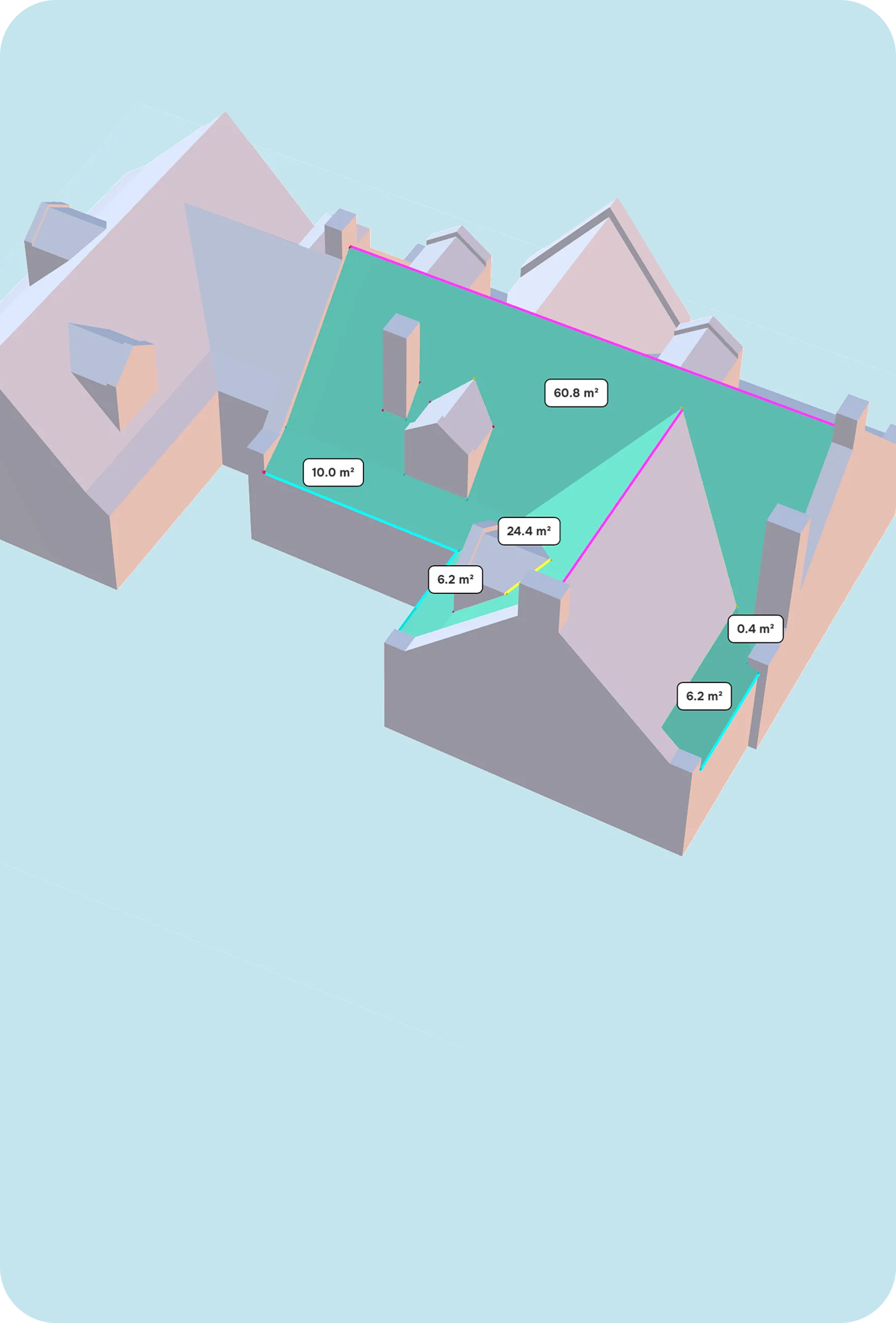
Dumoulin is currently at a trade fair in Las Vegas with her co-founders to promote their AI tool to American construction companies. It focuses specifically on preparing quotes for roofing work, which is time-consuming because it involves all kinds of calculations to count the number of roof tiles. With their AI solution based on aerial images, it can be done in a matter of minutes.

They have set up a Belgian stand where they give away waffles and chocolate. “There are 4,000 roofers in Belgium, but 400,000 in the US alone. We truly believe that we can make a big difference to the construction sector worldwide. What's more, we can see that we are technologically ahead of most of our competitors.”
Spotable, which has now raised €1.3 million, started in the Wintercircus in September 2024. "At first, there were three of us sitting at a desk, then six, then eight. Now there are 17 of us, too many to stay in the Wintercircus, but we don't want to leave. So now we're in the basement, in a room with one tiny window."
Dumoulin says the location is too important to leave just yet. “We see other, more experienced entrepreneurs walking around and try to make contact with them, and every two weeks we have drinks with the team on the roof terrace.” Their customers also like to meet up in the striking building.
Working hard
And what about the work culture? It may seem appealing from a distance, but in practice it mainly involves hard work. “My boyfriend knows that my laptop always comes with me on vacation,” says Dumoulin. She has also ruled out having children for the next five years. “All three of us founders told our partners this during a dinner.”
It is important to strike while the iron is hot: those who have raised a lot of money need to move quickly. “If you raise funds at a valuation of €5 million, the investing party will want to multiply that by ten,” says Aikido founder Roeland Delrue. “We are in a market where the pie has not yet been divided, so you have to capture that market share as quickly as possible.”
A few years ago, Delrue and his girlfriend always went to a restaurant on Saturdays, because on Friday evenings he was often still working late on his laptop. “In New York, it's 2 p.m., so if a customer suddenly says they want to pay 100,000 euros, you don't want to miss that opportunity.” He prides himself on the fact that long days or weekend work are not mandatory for the 130 employees. Yet people often do it voluntarily. “We certainly don't have to enforce it. The feeling that you are winning together also plays a role. Everyone also has shares, so the company is also a little bit yours. That seems to be motivating.”
Original article (in Dutch) appeared in Het Nieuwsblad


Autres témoignages de clients
Communiqués de presse
Les dernières nouvelles du secteur, des interviews, des technologies et des ressources.